Sutton Hoo
Sutton has the meaning “southern” or “settlement” and Hoo comes from the Old English hoh meaning a piece of land projecting into a valley. In this case the valley of the Deben River.
In 1939 one of the greatest archaeological treasures of all time was discovered in a field at Sutton Hoo in Suffolk – the Great Ship Burial, thought to be the final resting place of an Anglo-Saxon king. Earlier this year when we visited the British Museum we were fascinated by the collection of Sutton Hoo artifacts so we took the opportunity to visit the site on our way south from Norfolk.


There had been archaeologists working in the area for some time when beneath a mound they identified the shape of a ship and in the centre of the ship a burial chamber filled with a cache of extraordinary treasures. The treasures included weaponry, jewellery, musical instruments and many other objects of exquisite workmanship telling a powerful story of the life of a revered leader buried here. The burial has been dated by coins found in the treasure trove to around the year AD 625. Research seems to lead to the conclusion that it was the body of King Rædwald of East Anglia, an important and powerful ruler of the time.
The Great Ship was 24.38 metres long and is estimated to have weighed 10 tons when it was dragged uphill from the River Deben.


The Sutton Hoo Helmet
The most iconic of the treasures found in the burial chamber is the Sutton Hoo helmet. The original, painstakingly reconstructed, now resides at the British Museum with a reproduction on show at Sutton Hoo in the newly completed Visitor’s Centre.
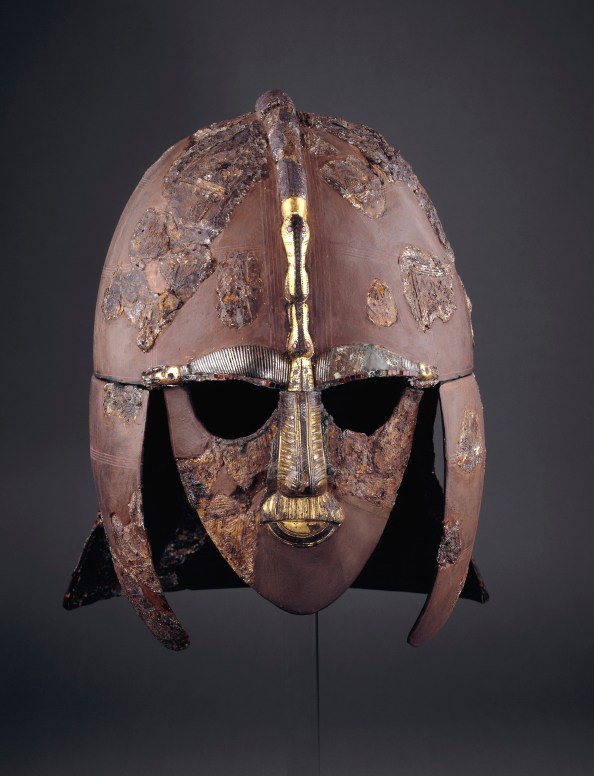
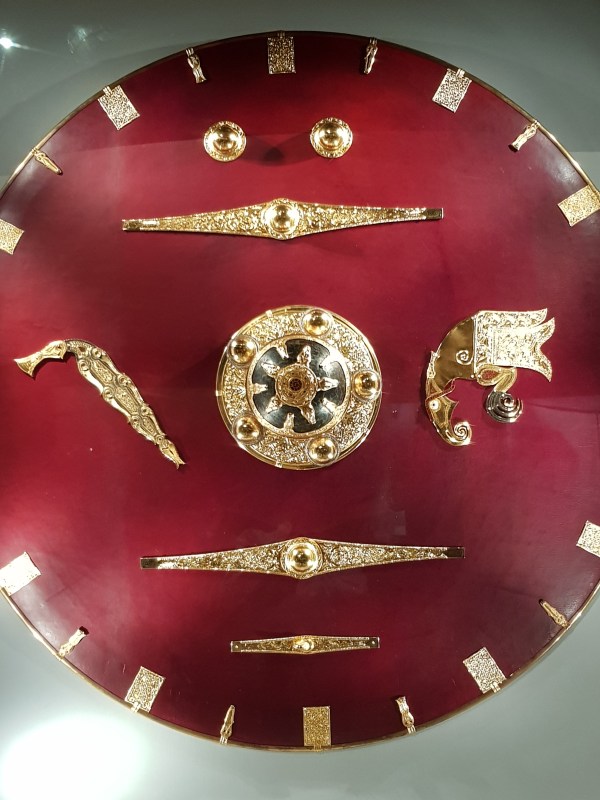
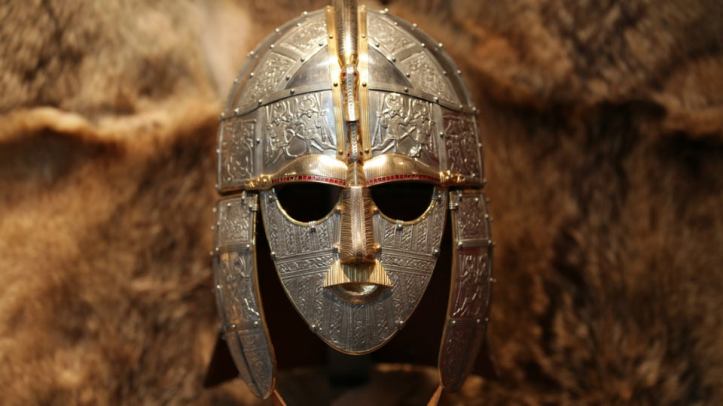
The new Visitor Centre


The Warrior Horseman
As well as the Great Ship there are many other burial mounds including that of a young horseman buried with his weapons and a very fine horse harness. The skeleton of his horse is buried in a separate grave next to him.
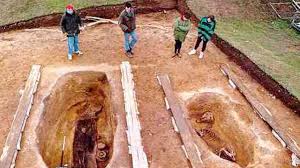


Easy walking tracks meander through the mounds and the ancient Anglo Saxon cemetery, enabling the visitor to feel very close to the past.


Research continues around Sutton Hoo with the aim of understanding the context in which it was created. The lives of those who lived and worked and were buried here offer up a rich tapestry of life in England in the Anglo-Saxon era.
If you find Sutton Hoo as fascinating as we do here are some excellent websites where you can continue your exploration of Anglo-Saxon England.
https://www.nationaltrust.org.uk/sutton-hoo
https://kids.kiddle.co/Sutton_Hoo
Cheers,
Frankie and Jim
 Jim and Frankie's Amazing Gap Year Adventure